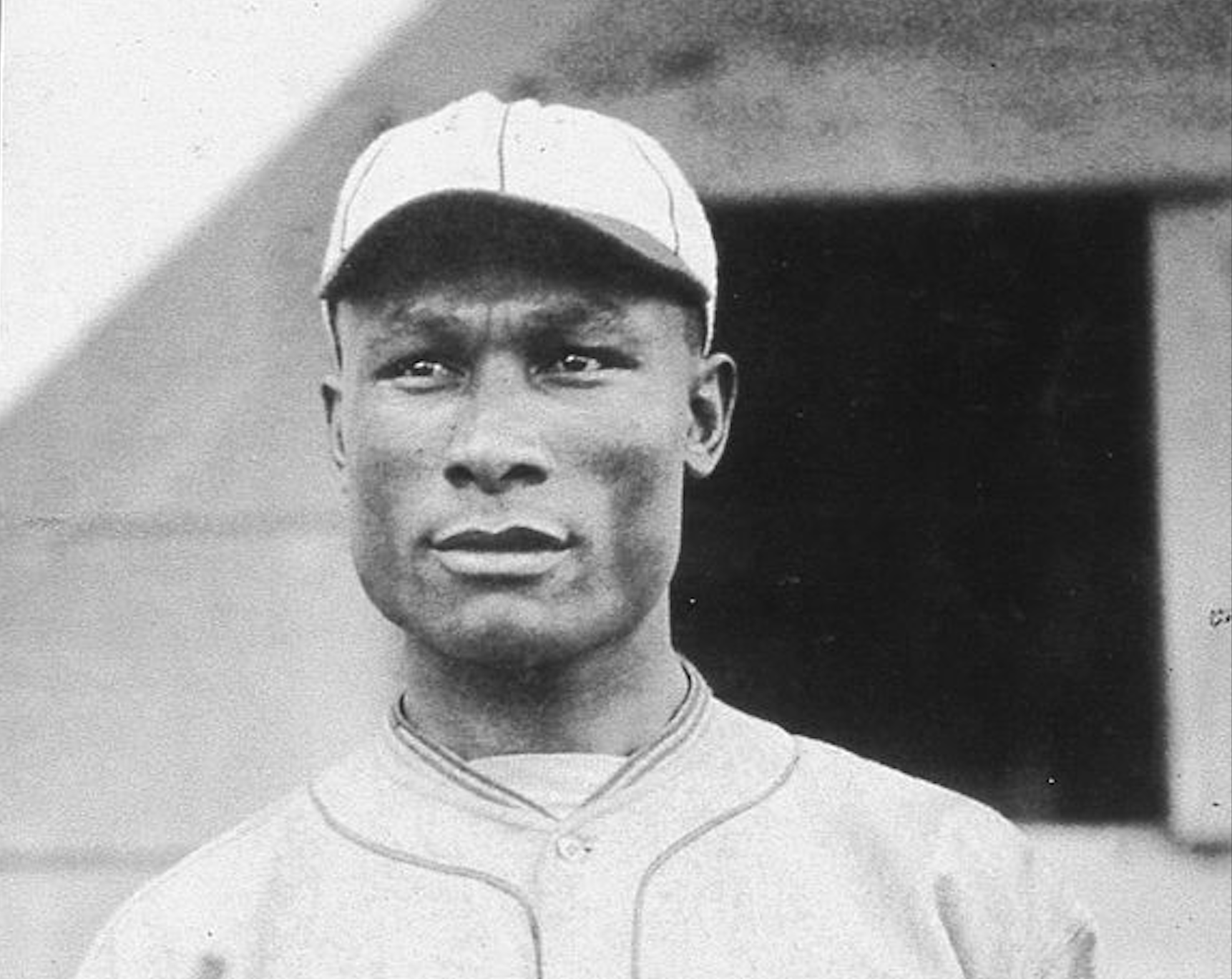
New research in passenger lists has increased confidence that we’ve got the right man in the search for Dobie Moore. It’s done the same for Charles “Chino” Smith, the legendarily pugnacious high-average hitter for the Lincoln Giants and Royal Giants in the late 1920s.

Smith is usually said (based probably on Riley’s Biographical Encyclopedia) to have been born in 1903 (no specific date) in Greenwood, South Carolina. However, back in 2011 I wrote that I had found a passenger list showing George Scales returning from Puerto Rico in the spring of 1926, after spending the winter there along with a whole team of Negro leaguers from New York (members of the Lincoln Giants and Royal Giants). Listed right below Scales was one Charles Smith, born September 24, 1901, in “Hamet,” North Carolina. While there is no Hamet in either of the Carolinas, there is a Hamlet, North Carolina, in Richmond County, right on the border with South Carolina.
Recently I came across a passenger list which showed all of the Negro league players travelling together and arriving in Puerto Rico on November 25, 1925.

It so happens that, based on Smith’s death certificate, I was able to find his family in South Carolina in the 1900, 1910, and 1920 census. In the last two the Smith family, including Charlie, lived in Society Hill, Darlington County, South Carolina—which is just 30 miles from Hamlet, North Carolina. It seems inescapable that the Charles Smith on the 1925 list of passengers arriving in Puerto Rico is the same person as the Charles Smith on the 1926 list of passengers arriving in New York, and that both are the ballplayer Chino Smith.
But what about the conflicting birth places—“Society Hall” (Society Hill), South Carolina, and “Hamet,” North Carolina? There could many reasons for this. Smith clearly spent much of his childhood in Society Hill (at least from age 8 to 18, and possibly more), and we don’t know exactly how the information on these passenger lists was compiled. It could be that in one instance he was asked where he was born, and in another instance what his hometown was.
Whatever the reason, it turns out that on at least two more passenger lists, Smith gave “Hamlet, North Carolina,” correctly spelled, as his birth place. First, returning to the U.S. from Cuba after the Cuban winter season on January 17, 1927:

And again returning to the U.S. from Cuba on January 24, 1928, two days after playing in the last game of the 1927/28 Cuban League season:

Putting everything together, we’ve experienced kind of a revolution in our understanding of Chino Smith, at least in terms of some basic facts.
• Instead of being born in Greenwood, South Carolina, in 1903, he appears more likely to have been born in Hamlet, North Carolina, on September 24, 1901.
• As David Lawrence pointed out to me last year, he was not quite the 5’6” “compact dynamo” described by James Riley. Check out this photo of the Lincoln Giants at the first Negro league game in Yankee Stadium in 1930:

• During his career, he was called (without exception, that I’ve found) “Charlie Smith” in U.S. newspapers, never “Chino.” This is the basis for his appearing in the Seamheads DB as Charlie Smith (though I may change that, since our search box doesn’t call up nicknames, making it hard to find him). In my limited sampling of Cuban newspapers for the 1927/28 season, I’ve seen him referred to as “el chino” (in lower case), but not as “Chino Smith.” The earliest I’ve seen the nickname used as a proper name is in a column by Cumberland Posey in the Pittsburgh Courier for November 30, 1935, when Posey calls him “Cheno Smith.”
• His home park for his greatest seasons was the bizarrely tiny Catholic Protectory Oval, shaped like a miniature Polo Grounds, with the outfield fence only 180 feet away down the foul lines (although in the deepest part of the park the fences were 358 feet from home plate). While there’s no doubt he was a talented hitter (and we don’t know what kind of ground rules may have been in effect at the Protectory), the size and shape of his home field are facts that anybody who wants to assess him as a player will have to grapple with.
• As I have written before (first in the Outsider Baseball Bulletin in 2010, then in this post) according to his death certificate Charlie Smith did not die of yellow fever, but rather of stomach and pancreatic cancer.


Leave a Reply